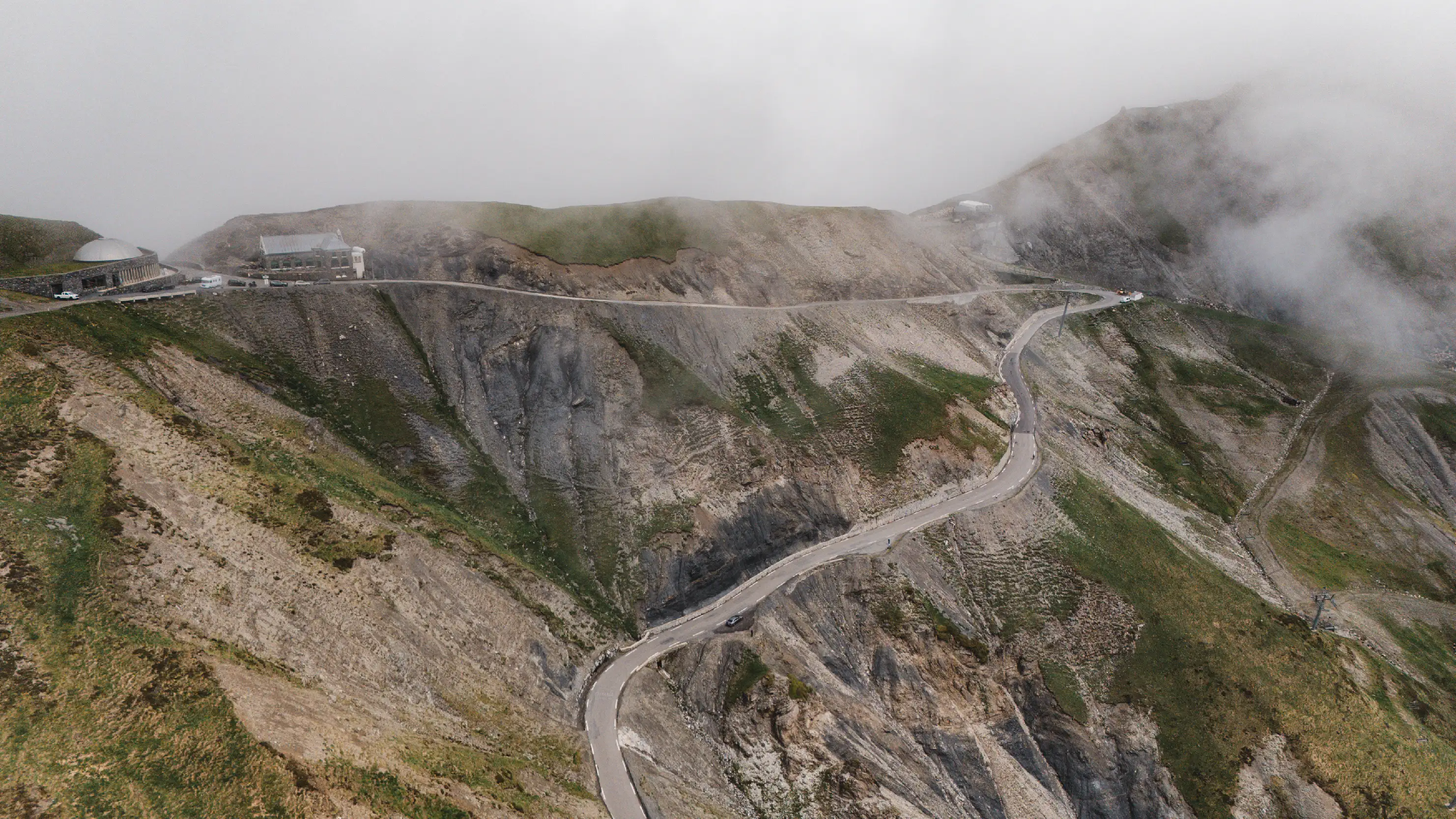
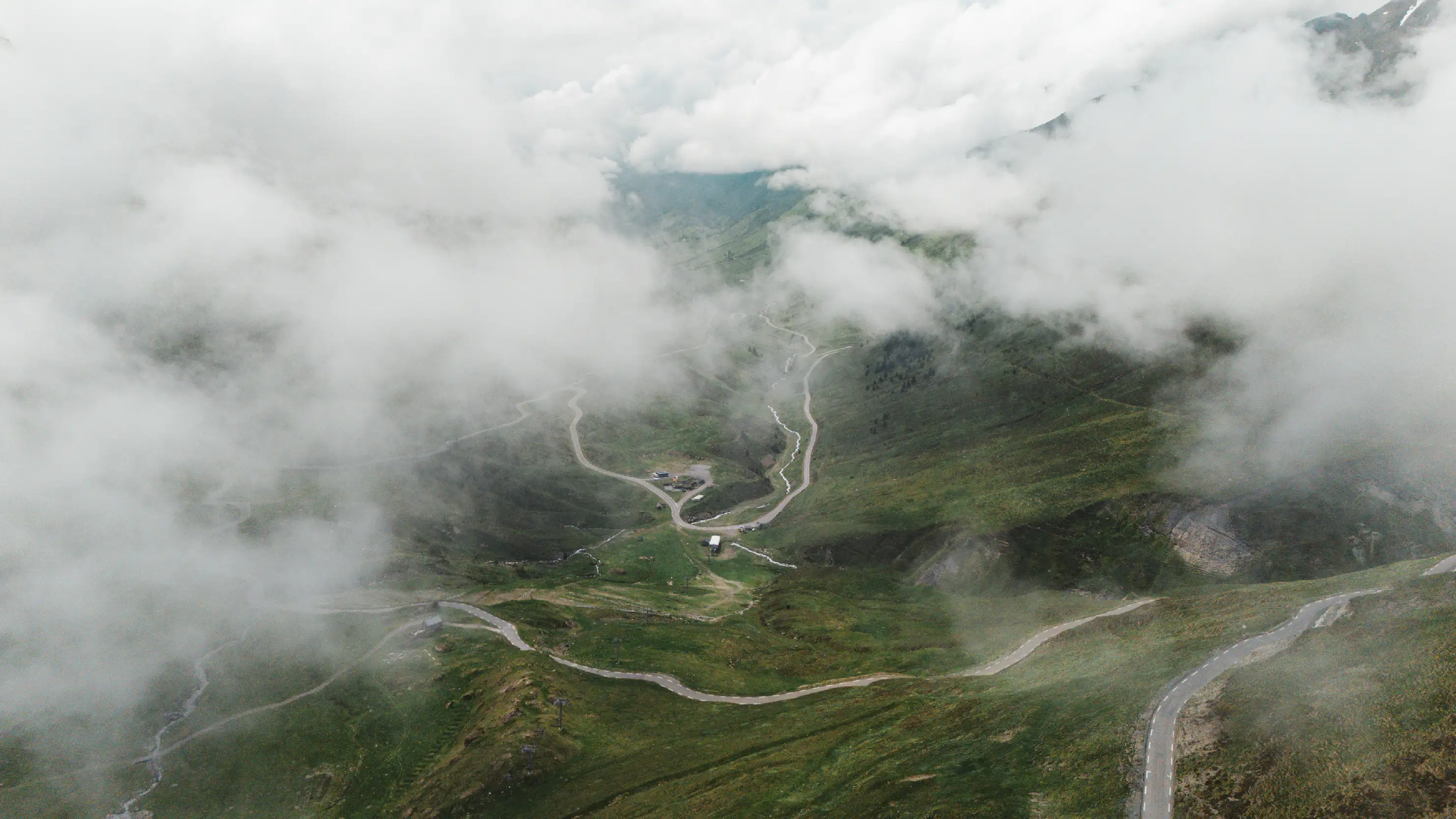
2027 Tour de France route: the 21 stages, from Edinburgh to the Champs-Élysées


2027 Tour de France Route: A look at the 21 stages from July 2 to 25. Our tips for exploring the most beautiful roads of this 2027 edition.
The 2027 Tour de France route, stage by stage
The2027 Tour de France route was unveiled this morning at the Palais des Congrès in Paris. Starting in Scotland, with detours through England and Wales, two hefty time trials, and a fiery finale in the Pyrenees. Here are the 21 stages under the microscope, our predictions (take them with a grain of salt), and our tips for riding the roads of the Grande Boucle.
The race will kick off on Friday, July 2, from Edinburgh, the northernmost Grand Départ in its history. The general classification should be decided in the third week, with the finish at the Col du Portet (2,215 m)—the highest point of the Tour—during the 18th stage.
The 2027 Tour at a glance
- Dates : 21 stages, from Friday, July 2 to Sunday, July 25, 2027.
- Distance : 3,479 km total, pending official confirmation.
- Elevation gain : 53,450 m of cumulative climbing.
- Profile : 7 flat stages, 6 hilly stages, 6 mountain stages, 2 individual time trials.
- Time trial : 71 km, the highest total since 2012.
- Summit finishes : Grand Colombier, Les Saisies, and Saint-Lary-Soulan Col du Portet.
- Rest days : Cherbourg-en-Cotentin on July 5, Haute-Savoie on July 12, Toulouse on July 19.
- Territory : 9 regions and 31 departments crossed in France, with 9 new stage towns out of 38.
Dates and figures for the 2027 Tour de France
The 114th edition begins on Friday, July 2, and concludes on Sunday, July 25, on the Champs-Élysées. A total of twenty-four days, including 21 days of racing and 3 rest days, covering 3,479 km before official certification, according to the official page of the route on letour.fr.
The route winds through Great Britain, western France, the Jura, the Alps, the Massif Central, and the Pyrenees, before the Parisian circuit. The total vertical gain is 53,450 m. The 2027 Tour de France map is available for download in PDF format from this same page, in case you want to hang it on your garage wall.
Time trials play a major role this year: 38 km between Blois and Chambord (Stage 7), followed by 33 km around Toulouse (Stage 16). These 71 km, a record since 2012, are a nice gift for Remco Evenepoel, the world time trial champion, and perhaps for our own Paul Seixas, who placed 3rd at the Montreal World Championships.
Nine towns or sites are making their first appearance on the map: Edinburgh, Carlisle, Keswick, Liverpool, Welshpool, Cardiff, Pontorson, Les Saisies, and Hasparren.
The Grand Départ in Scotland and the British stages
It’s a first: the Tour starts in Edinburgh. This marks the 28th foreign start and the 3rd in Great Britain, following London in 2007 and Yorkshire in 2014. The team presentation will take place on Wednesday, June 30, at Edinburgh Castle. We’ve seen worse backdrops for launching the world’s greatest race.
Three days of racing across the Channel: Scotland and England for the first two stages, then Wales, which is hosting the Tour for the first time. On Monday, July 5, the caravan crosses the Channel and sets up base in Cherbourg-en-Cotentin for the first rest day.

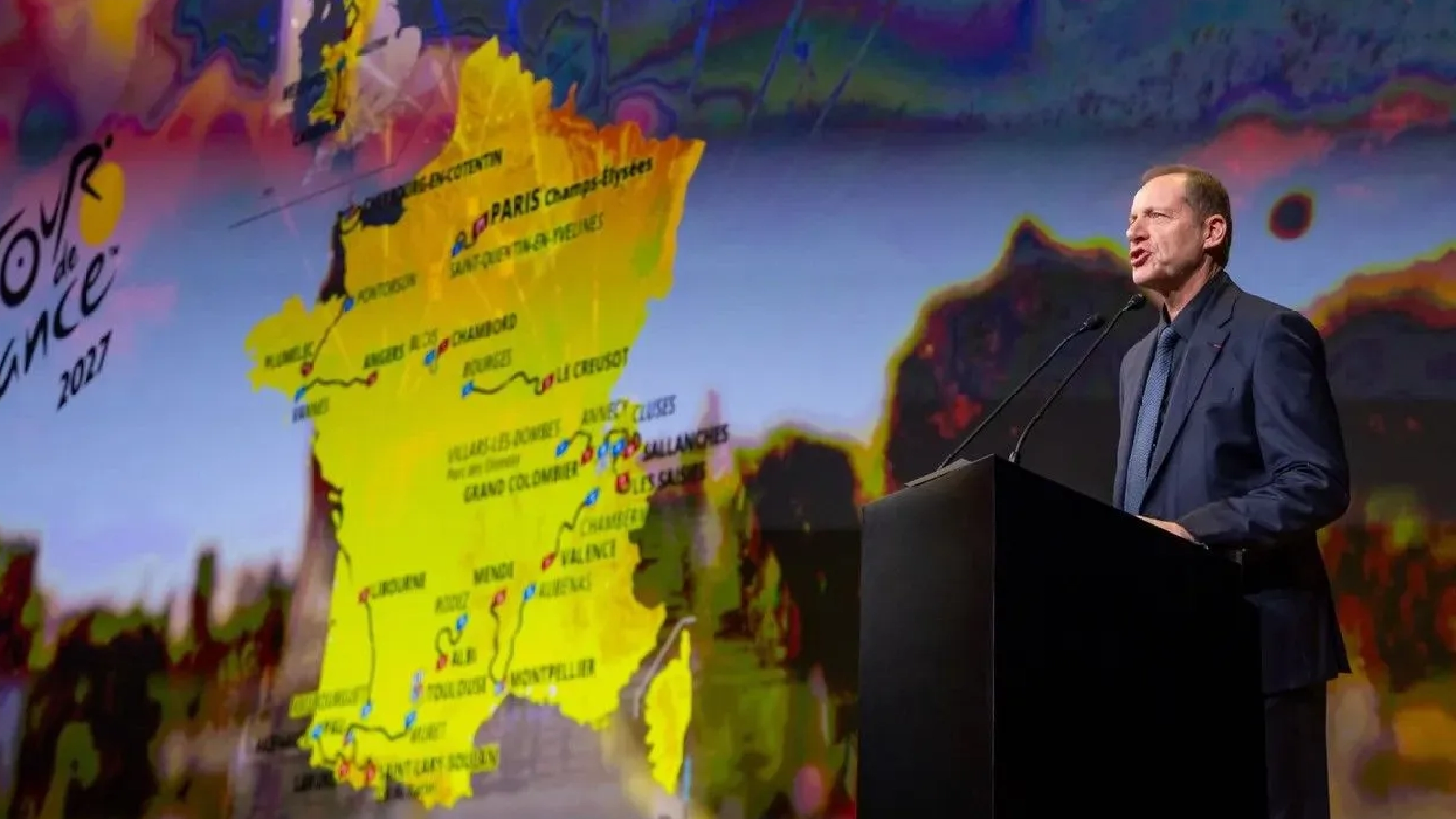

The 21 stages of the 2027 Tour de France, town by town
Here is the detailed route, including distances and stage types as classified by the organizers.
Stage 1, Friday, July 2: Edinburgh > Carlisle (185 km, flat)
The first Scottish stage in the history of the Tour. Only one categorized climb, the Côte de Melrose in the Eildon Hills, followed by a finish at the foot of Carlisle Castle. The profile leaves little room for surprise: a sprinter should be wearing the first yellow jersey.
Our pick: Paul Magnier. Go France!
Stage 2, Saturday, July 3: Keswick > Liverpool (223 km, hilly)
Starting in the heart of the Lake District, along the lakes of Thirlmere, Grasmere, Rydal Water, and Windermere, then heading toward Morecambe Bay and Lancaster (km 75). Five categorized climbs, including the Côte de Jubilee Tower in the Lancashire Fells. It is one of the longest days of this edition.
Finish in downtown Liverpool, where the fastest riders should be at it again. Paul Magnier for a repeat win? Let it be!
Stage 3, Sunday, July 4: Welshpool > Cardiff (223 km, hilly)
Wales enters Tour history via Welshpool. Eight categorized climbs, six of which are in the final 80 kilometers. The most formidable, the Caerffili climb (2 km at 8.1%), stands 12 km from the finish.
A great duel between punchers in prospect. Van der Poel, Van Aert, or Pogačar?
Stage 4, Tuesday, July 6: Cherbourg-en-Cotentin > Cherbourg-en-Cotentin (171 km, hilly)
A 171 km loop starting and finishing in Cherbourg, on terrain that never lets up. The constant accelerations will keep the pace high, and the Norman public will see the race pass by several times.
Our prediction: the first breakaway victory.
Stage 5, Wednesday, July 7: Pontorson > Plumelec (178 km, hilly)
Pontorson makes its debut on the map, at the gateway to the Mont-Saint-Michel bay. Heading to Plumelec, terrain the riders know by heart. The double ascent of the Côte de Cadoudal promises a puncher's finish.
Stage 6, Thursday, July 8: Vannes > Angers (193 km, hilly)
The peloton leaves the Gulf of Morbihan to reach Anjou. No major difficulties on the agenda: sprinters remain in the spotlight during the first week. With the time trial the following day, the favorites should ride conservatively.
Stage 7, Friday, July 9: Blois > Chambord (38 km, individual time trial)
A 38 km time trial with no major difficulties, between the Loire and the Chambord estate. The power riders will open up the first gaps, while the climbers will look to limit the damage. The first real test for the general classification before the Jura weekend.
Our prediction: yellow jersey for Remco.
Stage 8, Saturday, July 10: Bourges > Le Creusot (224 km, hilly, 3,100m elevation gain)
The longest stage of this 2027 Tour: 224 km and 3,100m of elevation gain across southern Burgundy. A grueling day, tailor-made for a strong breakaway.
Stage 9, Sunday, July 11: Villars-les-Dombes Parc des Oiseaux > Grand Colombier (162 km, mountain, 3,750m elevation gain)
First summit finish. After three mountain passes, the peloton tackles the legendary Grand Colombier, with its irregular slopes and double-digit gradients. A battle in store between the breakaway and the GC favorites.
Our prediction: Ben Healy.
Stage 10, Tuesday, July 13: Annecy > Sallanches (171 km, mountain, 3,750m elevation gain)
The day after the rest day, 171 km and 3,750m of elevation gain to Sallanches, at the foot of Mont Blanc. The finale serves as a dress rehearsal for the 2027 UCI Haute-Savoie Mont-Blanc World Championships, featuring the Côte de Domancy, the site of Bernard Hinault's triumph on August 31, 1980. L'Équipe actually rode with "Le Blaireau" on the Côte de Domancy, 45 years after his title.
Who can beat Pogačar?
Stage 11, Wednesday, July 14: Cluses > Les Saisies (150 km, mountain, 4,750 m elevation gain)
A Bastille Day stage with real flair: 150 km, 4,750 m of climbing, and a first-time finish in Les Saisies. On the menu: the Col de la Colombière, the Croix Fry, and the Col de la Forclaz de Queige, followed by the double-header of the Col du Pré and the climb to Bisanne from Beaufort to finish.
This is also the route for the2027 Étape du Tour, which will take place three days earlier, on Sunday, July 11. Calling all amateurs.
Stage 12, Thursday, July 15: Chambéry > Valence (162 km, flat, 1,600 m elevation gain)
After four days in the mountains, the sprinters find terrain more to their liking. But legs are heavy, and the breakaway could well play the spoiler.
Our pick: Mauro Schmid.
Stage 13, Friday, July 16: Aubenas > Montpellier (164 km, flat, 1,500 m elevation gain)
The profile gently slopes toward the Mediterranean. In the final section, the wind could pick up and cause crosswinds. A transition day that should still go to the sprinters.
Our pick: Jonathan Milan.
Stage 14, Saturday, July 17: Montpellier > Mende (199 km, mountain, 4,300 m elevation gain)
This isChristian Prudhomme's favorite stage. The Causses offer grueling terrain on rolling roads that are deserted the rest of the year. Two steep walls await the riders at the end of the stage: the Côte de l'Estrade (5.7 km at 8.3%), followed by the Côte de la Croix-Neuve, also known as the Laurent-Jalabert climb (3 km at over 10%).
One bad day, and a favorite could lose it all.
Stage 15, Sunday, July 18: Rodez > Albi (169 km, hilly, 2,500 m elevation gain)
Hilly terrain that should delight the breakaway specialists. The finish in Albi offers one last chance for the punchers before the rest day.
Our pick: a double for Ben Healy.
Stage 16, Tuesday, July 20: Toulouse > Toulouse (33 km, individual time trial)
The second time trial of this Tour, 33 km around the "Pink City," featuring a 12% wall just 9 km from the finish. It’s enough to reshuffle the deck right before the Pyrenees.
Paul Seixas in yellow?
Stage 17, Wednesday, July 21: Muret > Pau (186 km, flat, 2,000 m elevation gain)
The traditional Pau stage. On paper, it’s one for the sprinters. But on the eve of the queen stage, the priority will be energy conservation, and a breakaway could take advantage.
Stage 18, Thursday, July 22: Pau > Saint-Lary-Soulan Col du Portet (174 km, mountain, 5,400 m elevation gain)
The queen stage: 174 km and 5,400 m of climbing, the highest total of this edition. Col du Soulor, Col du Tourmalet, Hourquette d'Ancizan, and then the finish at the Col du Portet, at 2,215 m, the roof of the 2027 Tour.
A dream stage that should crown the best climber, and likely the future winner.
Stage 19, Friday, July 23: Hasparren > Laruns (160 km, mountain, 4,300 m elevation gain)
Our personal favorite, with a trip through the Basque Country. Hasparren makes its debut on the map. After Saint-Jean-le-Vieux, it’s time for the sublime sequence of the Col de Burdincurutcheta and Col de Bagargui, before heading toward Laruns, at the foot of the Aubisque and the Ossau Valley. The last chance for the climbers before Paris.
Our pick: Tom Pidcock.
Stage 20, Saturday, July 24: Maubourguet > Libourne (198 km, flat)
Heading for the Libourne region through vineyards and hillsides. The teams that survived the Pyrenees should lock down the race for one final sprint opportunity.
Our pick: Olav Kooij.
Stage 21, Sunday, July 25: Saint-Quentin-en-Yvelines > Paris Champs-Élysées (116 km, flat)
116 km to the Champs-Élysées, including the final circuit and the climb up Rue Lepic, which has become iconic since the Paris 2024 Olympic Games.
Who will succeed Van Aert and Van der Poel?

Mountain passes to discover on the 2027 route
The peloton passes, but the mountain passes remain. Here are our eight favorite climbs on the 2027 route to tackle before or after the race goes through. The figures provided are for the most classic side.
Grand Colombier (Stage 9)
1,501 m · from Culoz: 17.6 km · approx. 1,240 m elevation gain · approx. 7% average gradient · sections at 14%
The giant of the Bugey is a climb that defies its average gradient. You'll find double-digit ramps, flat sections, and then it kicks up again. But at the summit, on a clear day, the reward is immense: a panoramic view of the entire Alpine range, with Mont Blanc in all its majesty, and the Rhône and Lake Bourget down below.
Our tip: start early. In summer, heat haze quickly obscures the summits by late morning.
Col de la Colombière (Stage 11)
1,613 m · from Scionzier: 16.5 km · 1,108 m elevation gain · 6.8% average gradient · sections at 10%
A true classic of the Aravis range. The climb from the Arve Valley passes through Le Reposoir and its charterhouse, then ends at the foot of the limestone cliffs of the Bargy range. Crossing over toward Le Grand-Bornand opens the door to a beautiful Aravis loop.
Our tip: combine it with the Côte de Domancy (Stage 10) in a loop starting from Cluses or Sallanches. Two Tour stages in one ride.
Montée de Bisanne (Stage 11)
Signal de Bisanne 1,930 m · from Villard-sur-Doron: 14.4 km · 1,225 m elevation gain · 8.5% average gradient · sections at 12%
Little respite and plenty of steep gradients, but what a setting. The road rises above the Beaufortain, between alpine chalets and balconies facing Mont Blanc, before dropping down toward Les Saisies. This is the finale of the 2027 Étape du Tour: if you're registered, this is the climb to scout first.
Our tip: save your energy. After the Colombière, Croix Fry, Forclaz de Queige, and Col du Pré, Bisanne arrives when your legs are already cooked.
Côte de la Croix-Neuve, Laurent-Jalabert climb (Stage 14)
Approx. 1,040 m · from Mende: 3 km · approx. 300 m elevation gain · 10.1% average gradient
Only three kilometers, but a cult location. This is where Laurent Jalabert won on July 14, 1995, at the end of a breakaway of nearly 200 km. The climb has borne his name since 2005 and heads straight up toward the Mende airfield.
It is also the gateway to the Causses and the Tarn Gorges, lesser-known roads where you'll encounter more sheep than cars.
Our tip: climb it at the end of your ride, after a loop through the Tarn Gorges. And don't start too fast: the bottom is the steepest part.
Col du Tourmalet (Stage 18)
2,115 m · from Luz-Saint-Sauveur: 19 km · 1,404 m elevation gain · 7.4% average gradient · sections at 10%
The most frequently climbed pass in Tour history since 1910. The 2027 Tour approaches it via Luz-Saint-Sauveur and Barèges—our favorite side, which is wilder and opens up into vast pastures for the final third. At the summit, the Giant of the Tourmalet awaits you.
Our tip: Aim for the summit before noon; afternoon thunderstorms are common in the summer.
Col du Portet (Stage 18)
2,215 m · from Saint-Lary-Soulan: 17 km · 1,414 m elevation gain · 8.3% average gradient · sections at 12.5%
The roof of the 2027 Tour and the finish of the queen stage. Discovered by the Tour in 2018, the Portet has become a monument in just a few years. It features a steady, demanding climb on a road that rises above the forests and into a rocky, almost lunar landscape.
Our tip: Combine the Tourmalet and Portet during a three- or four-day trip in the Hautes-Pyrénées. And bring a windbreaker: at 2,215 m, the descent can be chilly, even in July.
Cols de Burdincurutcheta and Bagargui (Stage 19)
Burdincurutcheta 1,135 m · Bagargui (Bagargiak in Basque) 1,327 m · from Saint-Jean-le-Vieux: 29 km · 1,117 m elevation gain · sections over 11%
Don't let the average gradient (less than 4%) fool you: after a long approach along the valley floor, the road kicks up sharply toward Burdincurutcheta. From there, it’s the Basque Country at its best: grassy ridges, wild pottok ponies, vultures circling overhead, and the Iraty forest on the horizon. Few cars, lots of thrills. It’s our personal favorite.
Our tip: the area is remote. Head out with plenty of water and food, and keep an eye out for the refreshment stop at the Iraty chalets, near the Col de Bagargui.
What if you climbed them without cars?
Every summer, several mountain passes close to traffic for a few hours to give the roads back to cyclists: it’s free, requires no registration, and is non-competitive. In 2026, the Grand Colombier and the Tourmalet were on the schedule. We’ve listed everything in our article Car-free cycling passes 2026: the complete calendar for riding without cars.
We will publish the 2027 calendar as soon as the dates are announced. It’s the perfect way to plan your recon of the Tour route in peace and quiet.
Want to ride the roads of the Tour?
Our trips take you along the most beautiful roads in France, often the same ones used by the Tour. We take care of everything: route scouting, accommodation selection, meals, support vehicle, and a photographer-videographer to capture your greatest climbs.
Three formats to choose from:
- Trips : self-guided, solo or with friends, at your own pace.
- Groups / Training Camps : in small groups, with support and fun evenings.
- Corporate : custom seminars and team-building events.
See you in July on the side of the road. Or better yet, on it.